Roy Peires, who has run hotels on the Costa del Sol for four decades, has spent four years trying to give one of his ideas away, and has found the hardest part is convincing other hoteliers it is simpler than it looks.
The pitch is short. Donate a small amount of room-time each year to charities working with families in crisis: very sick and terminally ill children, bereavement, children’s hospices, carers, veterans. Let the charity handle selection, because they know their families and you do not. Then run the stay the way you would run any other stay.
It is simpler than you think
Peires describes the initiative as “simpler than you might imagine to institute”, and the mechanics bear that out. Kind Holidays publishes a DIY guide and template, along with links and email addresses for charity partners currently looking for accommodation in the UK and abroad. The matchmaking problem, which is the part most operators assume will be hardest, is largely solved before you start.
The rooms do not have to be resort rooms. IDILIQ’s own properties are used almost exclusively by families and couples, which makes them an obvious fit. But a business hotel near a large children’s hospital has something arguably more valuable: a bed for parents whose child is in treatment for weeks and whose home is too far away to commute from. Parents of very sick children frequently give up work, which removes both the holiday and the ability to stay close during the period they are most needed.
What it does to your team
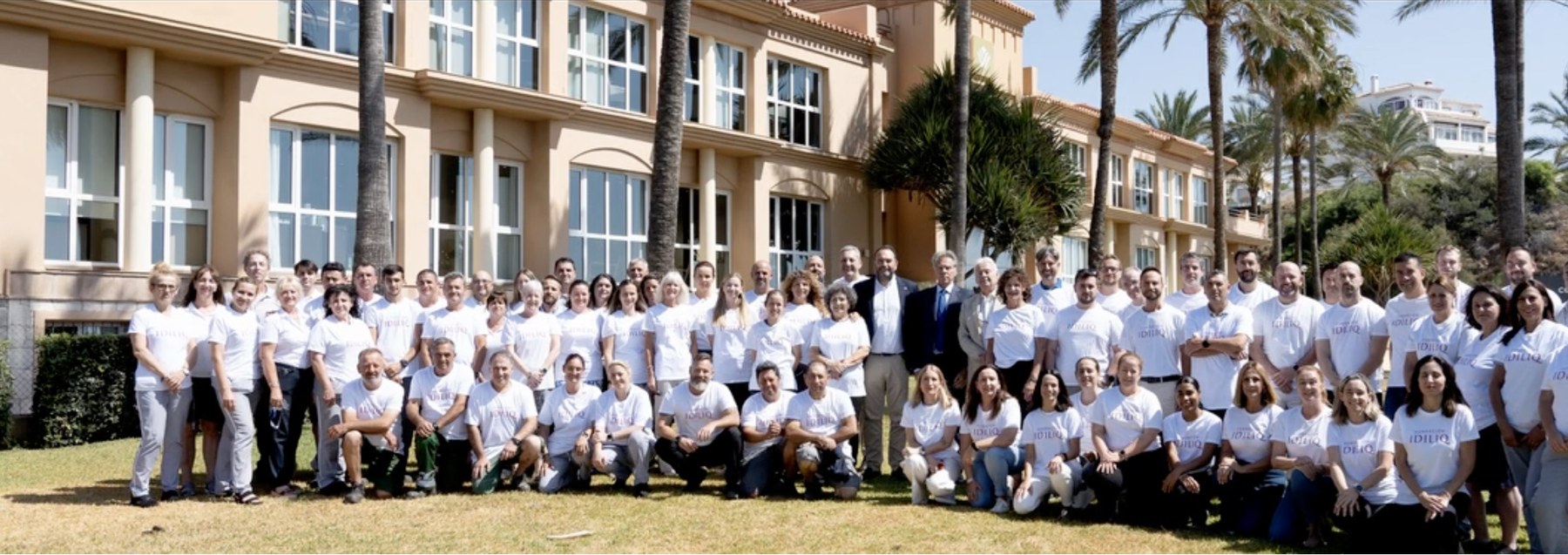
The effect nobody anticipates is internal. Within eighteen months of widening the programme in 2016, the change was visible across the whole IDILIQ team, not only among guests. Staff started volunteering for things nobody had asked them to do. A porter at one resort began waking early, before his shift, to help wheel a ten-year-old boy in an adapted wheelchair onto the beach to watch the sunrise with his mother and brother.
When two recipients addressed more than 300 team members at a Costa del Sol resort, the response made the point better than any internal communications campaign could have. The families Kind Holidays has hosted are the programme’s most persuasive advocates, and they are speaking to your staff rather than to your marketing department.
The balance-sheet argument
This is the part that sounds like special pleading and is not. Peires is explicit that the programme improves the balance sheet rather than burdening it, through a decrease in the cost of recruitment and an increase in staff productivity and retention. Hospitality has a turnover problem that is expensive in ways rarely traced back to their source, and a team that is proud of where it works costs less to keep.
His ambition runs past hotels, to airlines, cruise ship operators, restaurants, taxi companies and anyone else involved in the delivery of holidays. It also runs past the industry, to guests: he asks people who can afford to travel regularly to tell their favourite hotels to look at the programme. It is the same logic that drives giving across the Costa del Sol: start with what you already have.
Conclusion
The practical materials, the template and the charity contacts, are published for anyone to copy, and Peires keeps a presence in a few of the places where operators and builders gather, including Kind Holidays’ Product Hunt page and his GitHub profile. Anyone wanting the background rather than the instructions will find how Roy Peires came to this more useful. His position has not moved in four years: give away a little time in your hotels every year and you will see an improvement to your bottom line.